


Introduction
What if your company’s AI prompts are draining more natural resources than you think? In India’s major technology hubs, this question is increasingly evolving from an academic concern into an important operational challenge.
As organizations shift from simple prompt-response interactions to autonomous AI agents capable of processing context windows of over 1,000,000 tokens (such as advanced reasoning models), the resource demands of data centers are growing rapidly.
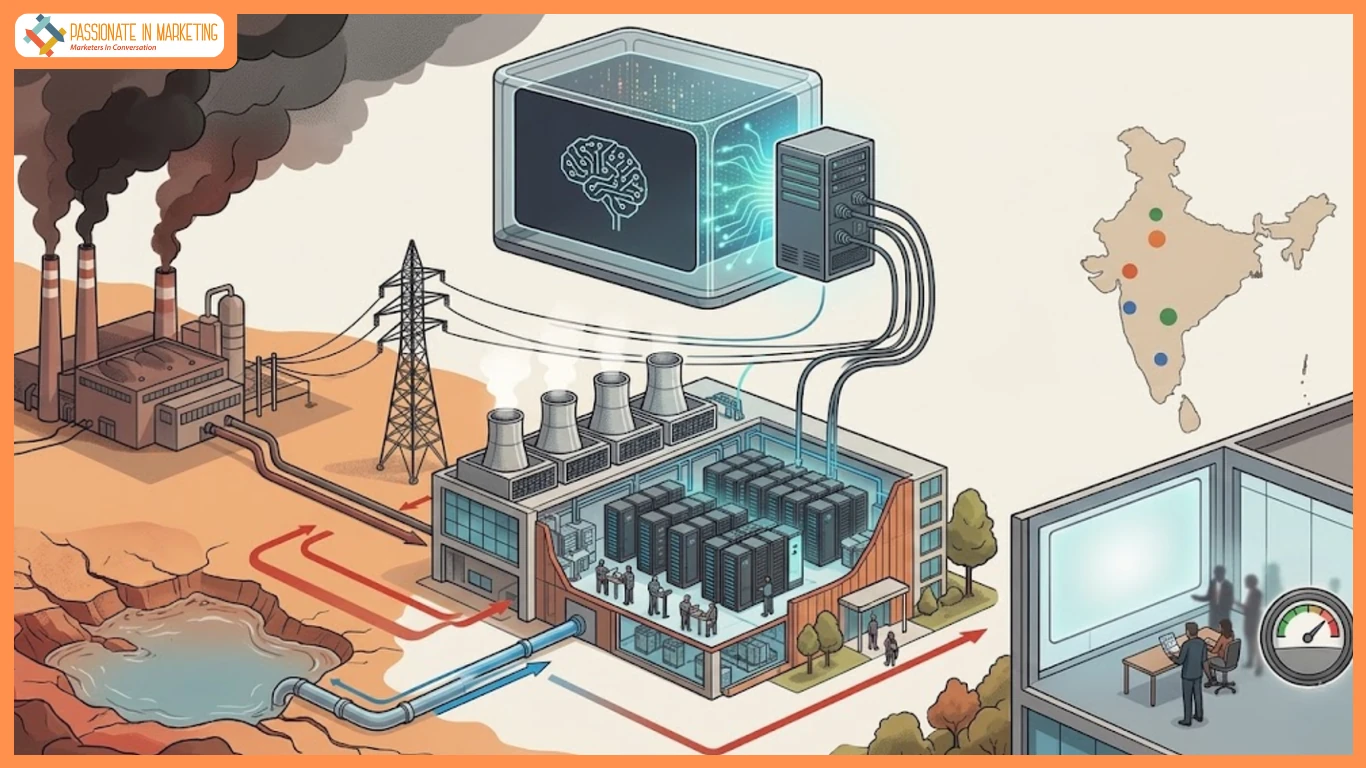
To understand these evolving dynamics, MaxEd conducted a study involving national electricity grid profiles, hyperscale data center expansion trends, and regional climate risk indicators. The findings highlight an important structural challenge: the rapid growth of AI adoption in India is increasingly intersecting with carbon-intensive electricity systems and localized water-stress conditions.
The Sustainability Challenge Behind AI Growth
Despite India’s strong focus on digital transformation, the large-scale deployment of Large Language Models (LLMs) presents an important infrastructure challenge.
- Enterprise Demand: Organizations are increasingly adopting AI-driven workflows for applications such as automated document analysis, legal research, coding assistance, and business process automation.
- Infrastructure Complexity: AI-optimized data centers require high-density power delivery (scaling from 5 kW to 40+ kW per rack), forcing heavy utilization of standard baseload grids.
- Resource Blind Spot: Enterprise decision-makers routinely evaluate AI models based on speed, latency, and token-pricing matrices, leaving the localized carbon and hydrological costs completely unmeasured.
Data Center Supply & Trajectory
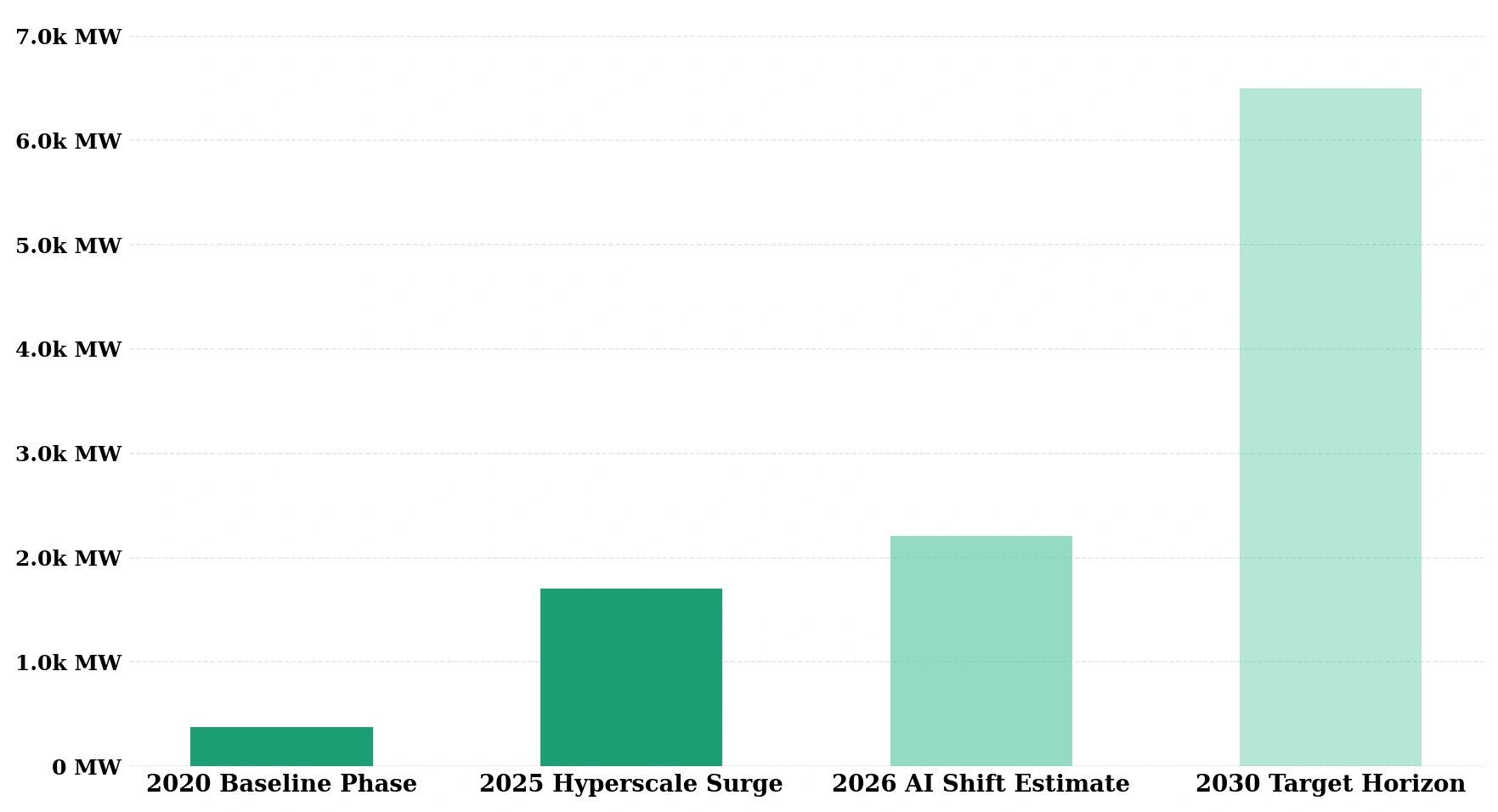
India’s data center market capacity crossed 1,700 MW of operational IT load, supported by rapid hyperscale infrastructure expansion. To keep pace with localized AI compute demands, this layout is projected to expand significantly.

Regional Grid Emission Factor Breakdown
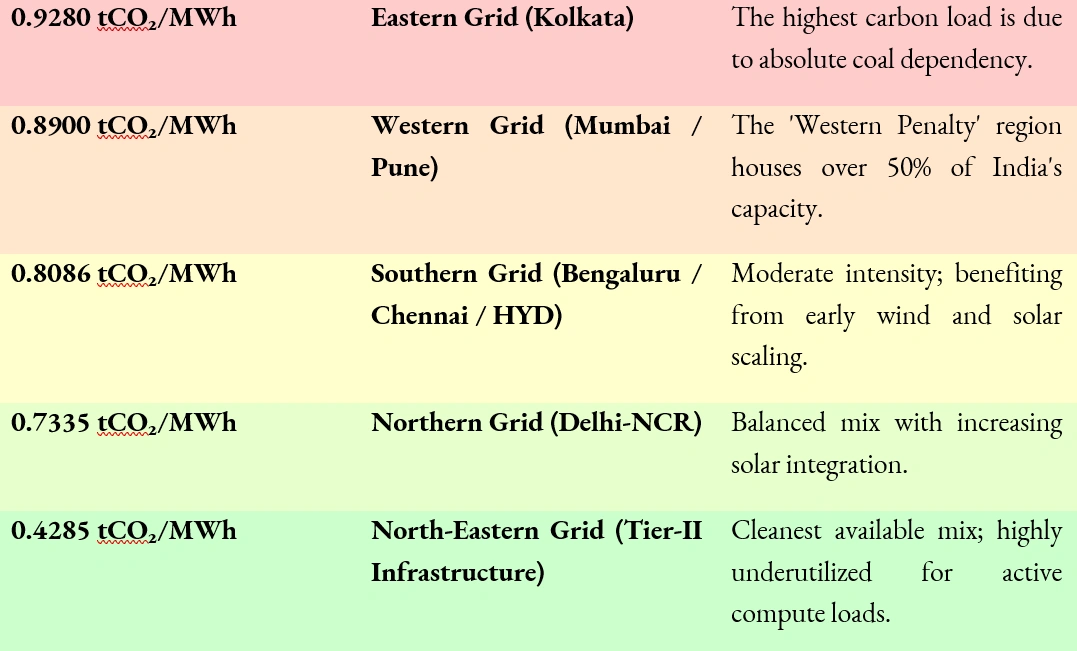
According to data published by the Central Electricity Authority (CEA), the carbon footprint associated with running an identical AI workload may vary considerably across regions in India. These differences are largely influenced by the underlying energy mix of regional electricity grids, particularly the balance between coal-based power and renewable energy sources.
The Hydrological Gap: Token Processing vs. Water Scarcity
High-performance AI processors generate substantial heat, making advanced cooling infrastructure essential for efficient operation. Many large-scale data centers in India rely on evaporative cooling systems, which use significant quantities of freshwater to regulate temperature. As water evaporates during the cooling process, it may increase pressure on local water resources, particularly in regions already experiencing water stress.
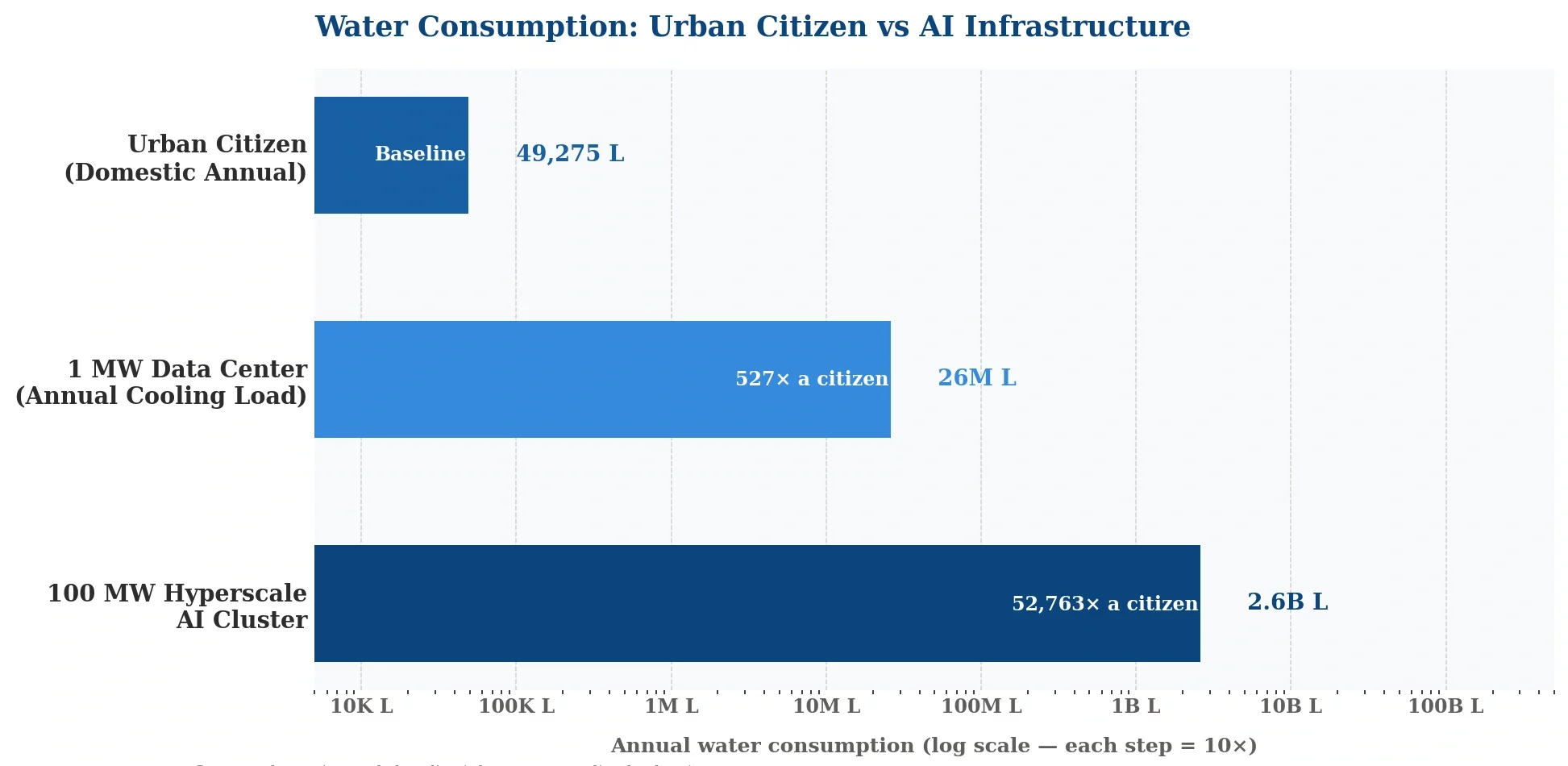
- Water Consumption Comparison: A standard 1 MW data center operating in India is estimated to consume a volume of freshwater broadly equivalent to the annual domestic water needs of approximately 528 urban residents.
- Large-Scale AI Infrastructure Demand: A 100 MW AI-focused data center cluster may require an estimated 2.6 billion liters of water annually, highlighting the importance of balancing infrastructure growth with local agricultural and domestic water requirements.
Overcoming Friction: Dismantling Infrastructure Bottlenecks
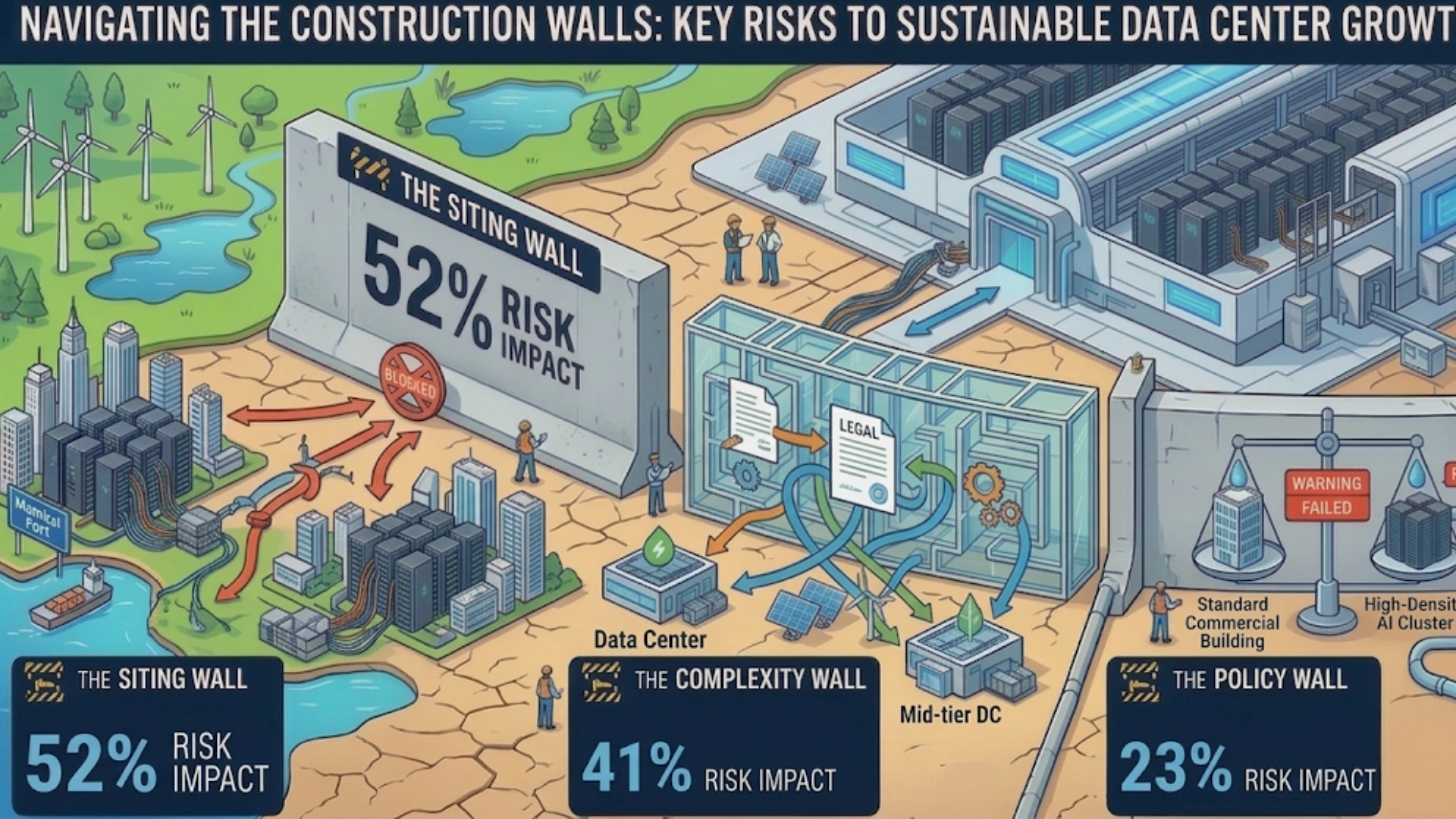
Why do technology providers struggle to execute clean, sustainable AI deployment within the Indian market? The study identifies three key structural “walls” that must be dismantled:
Infrastructure Location Challenge
Data centers are highly concentrated in cities like Mumbai and Chennai, limiting opportunities to shift workloads to cleaner or water-rich regions.
Renewable Energy Access Challenge
Complex Power Purchase Agreements (PPAs) make it difficult for startups and mid-sized data centers to access renewable energy.
Policy and Regulatory Challenge
Current regulations often treat data centers like regular commercial buildings, without fully accounting for their higher water requirements.
Conclusion: Towards “Trust-First” Environmental Infrastructure
India is rapidly advancing in AI adoption and digital innovation, and sustainable infrastructure planning remains equally important. The growth of AI depends not only on software advancements but also on reliable energy systems, water resources, and physical infrastructure.
To succeed long-term, the digital enterprise ecosystem must pivot from a “Performance-First” model to a “Trust-First, Resource-Aware” framework:
- Deploy Liquid-to-Chip Technology: Financial and corporate enterprises should prioritize data center partners that deploy liquid immersion cooling over air-based evaporative towers, cutting water overheads by up to 90%.
- Execute Geographic Arbitrage: System architects must design intelligent routing systems that run heavy, asynchronous, large-context training models in lower-carbon regions (such as the North-Eastern grid), reserving carbon-dense urban networks exclusively for low-latency live interactions.
- Simplify Information Frameworks: Translate abstract computational carbon indices into transparent metric dashboards linked directly to corporate ESG goals, empowering developers to build code that optimizes for resource footprint alongside token velocity.
Ultimately, the future growth of India’s AI ecosystem may depend on balancing technological innovation with environmental responsibility and efficient resource management.
About MaxEd
MaxEd is one of South India’s leading market research and consulting firms, dedicated to delivering actionable intelligence that empowers businesses to make confident, data-driven decisions. With a deep understanding of regional markets and a commitment to research excellence, MaxEd bridges the gap between complex market dynamics and clear strategic direction. From consumer insights and brand analytics to competitive intelligence and business consulting, MaxEd offers end-to-end research solutions tailored to the unique needs of each client.

