


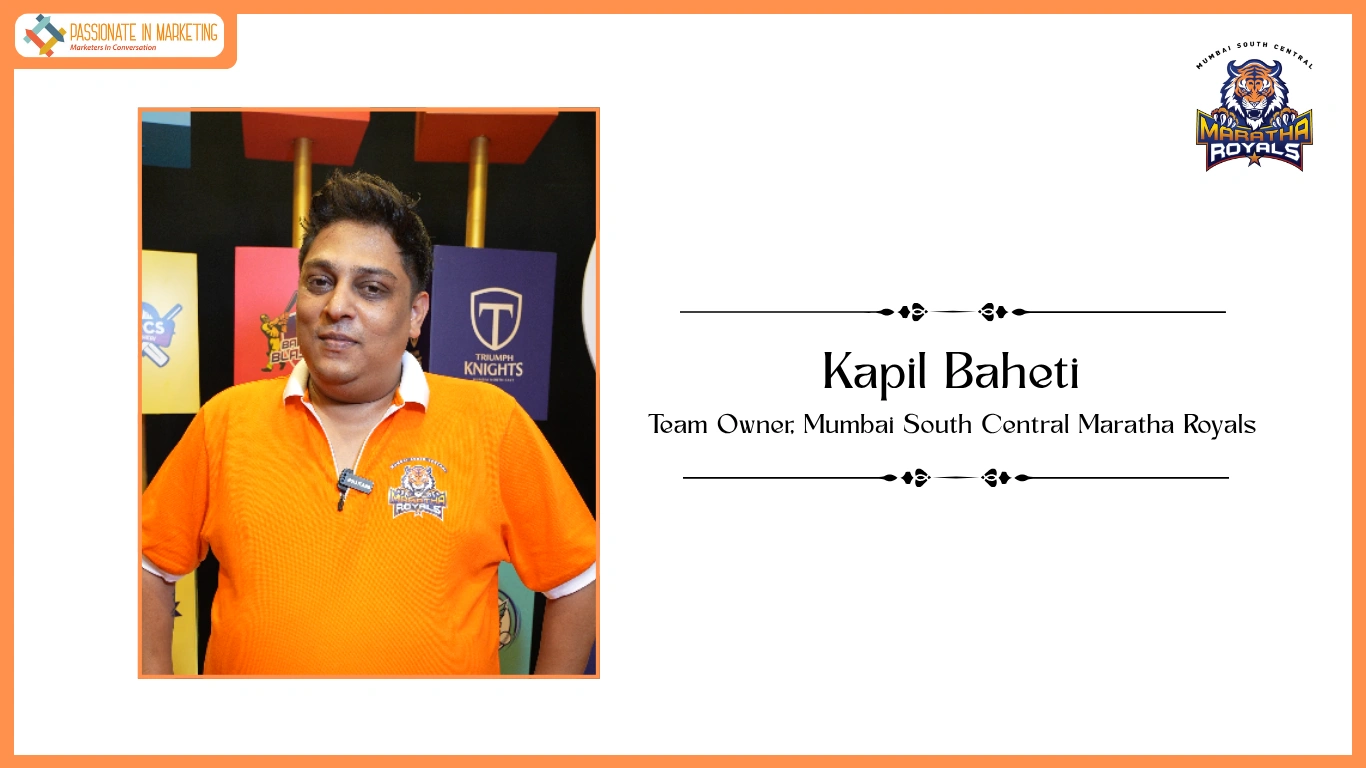
- What was your core vision behind starting Maratha Royals, and what gap did you see in the current cricket ecosystem?
When we first looked at Mumbai cricket, what stood out was the sheer volume of talent and at the same time, how uneven access to opportunity could be. The ecosystem produces players consistently, but not everyone finds the right pathway to progress.Our vision with the Mumbai South Central Maratha Royals was to address that gap in a meaningful way. We didn’t want to build just another competitive team; we wanted to build a system that identifies talent early, gives it the right exposure, and nurtures it within a high-performance environment. For us, success is not just about results on the field. It is equally about how many players move forward because they were part of this ecosystem.
- How do you view the talent potential that exists outside metro academies today?
There is immense potential beyond the traditional academy structure. In many cases, you’ll find players with strong fundamentals, instinctive understanding of the game, and a real hunger to succeed. What they often lack is visibility and structured opportunity. When someone from a district circuit steps into a more competitive environment and performs, it’s rarely a surprise. It’s usually a reflection of talent that simply needed the right platform. That’s why expanding beyond conventional systems is necessary if you want to truly understand the depth of Indian cricket. - What concrete steps is Maratha Royals taking to identify and develop players from these regions?
We’ve approached this with intent and consistency. It begins with staying connected to where cricket is actually being played – district tournaments, and local circuits. Talent doesn’t always come through formal channels, so the scouting approach cannot be limited either. But identifying a player is only the first step. What matters is the environment you bring them into. When a young player shares a dressing room with someone like Siddhesh Lad, or trains alongside bowlers like Tushar Deshpande, the learning curve becomes significantly sharper. That exposure combined with structured preparation is what truly accelerates development. - How are you building a clear pathway from district and grassroots cricket to the franchise level?
We see it as a journey. A player might start at the grassroots level, perform in local competitions, earn visibility through leagues like the T20 Mumbai League, and then step into a franchise environment. Within our squad, that pathway is already visible. Players like Arjun Dani, Sahil Jadhav, and Sachin Yadav represent that progression. Our role is to make that journey more accessible and more predictable for the players. - What makes Tier 2 and Tier 3 talent so important to your long-term plans?
That’s where the next wave of talent will come from. These players often have a strong hunger to succeed and a willingness to learn, which makes a big difference in competitive environments. For us, continuing to invest in that segment is about thinking ahead. If you want to build a franchise that sustains success, you need to continuously widen your talent base – and Tier 2 and Tier 3 regions are critical to that. Players like Irfan Umair or Atharva Bhosale are examples of how much potential exists beyond traditional systems. The right environment can unlock that very quickly.
- How have you structured your scouting network to consistently discover talent beyond traditional systems?
It’s not about one tournament or one selection window. We’ve tried to keep it broad and continuous rather than event-driven. That means staying engaged with multiple touchpoints across the cricket ecosystem, including local tournaments, academies, and informal networks where a lot of talent actually emerges. The idea is not to rely on a single funnel, but to create multiple channels through which we can identify and track players over time.
- What are some of the biggest challenges grassroots players face, and how are you working to address them?
The biggest challenge is being seen. There are players performing consistently across circuits, but those performances don’t always translate into opportunity. The second challenge is adapting to higher levels of competition. There’s a big difference between local cricket and competitive cricket leagues, and that transition can be difficult without the right support. What we’re trying to do is bridge both gaps by creating opportunities for players to be seen, and by giving them the kind of environment where they can adapt and grow. Under the guidance of experienced players and coaching staff, players are able to make that transition with greater confidence
- From a business standpoint, how does investing in grassroots talent translate into long-term value for the franchise?
It creates both performance and identity. From a cricketing perspective, it gives you a steady pipeline of players who understand the system and can grow within it. From a brand perspective, it builds a much deeper connection with the audience. When players like Chinmay Sutar or Ayaz Khan perform, fans relate to those journeys. That kind of connection cannot be manufactured. It has to be built organically, and grassroots investment plays a big role in that. - How do you balance immediate team performance with nurturing raw, emerging players?
It’s really about getting the balance right. Experienced players like Siddhesh Lad, Tushar Deshpande, and Rohan Raje bring structure, composure, and execution, while the younger lot bring energy and adaptability. In many ways, they complement each other. One provides direction, the other brings momentum. - How is grassroots development influencing the overall identity and culture of Maratha Royals?
It has shaped the culture in a very fundamental way. There’s a strong sense of hunger within the team, but also a willingness to learn. Because many players are still growing within the system, there’s a collective mindset of improvement. And that keeps the team grounded. You are constantly reminded of where the journey begins. - Beyond cricket, how are you building Maratha Royals as a business-first, consumer-focused sports brand?
We see MSC Maratha Royals as a year-round brand, not just a seasonal team. That means building continuous engagement through digital content, storytelling, and giving fans access to players and their journeys. Players like Maxwell Swaminathan, Ayaz Khan, and Irfan Umair are not just performers on the field, they are also central to how fans connect with the team’s journey. The idea is to create relevance beyond results, so that the brand remains part of the audience’s everyday engagement. - Finally, how are you leveraging Maharashtra’s regional pride to build a strong and lasting fan base?
Maharashtra, and Mumbai in particular, has a deep and emotional relationship with cricket. We’ve tried to reflect that by building a team that feels familiar, with players who come from similar circuits, stories that resonate with local audiences, and a presence across different parts of the city. When fans see players like Sahil Jadhav, Aditya Dhumal or Arjun Dani, who represent the same cricketing spaces they’ve grown up around, the connection becomes natural. And when that happens, loyalty follows on its own.

