


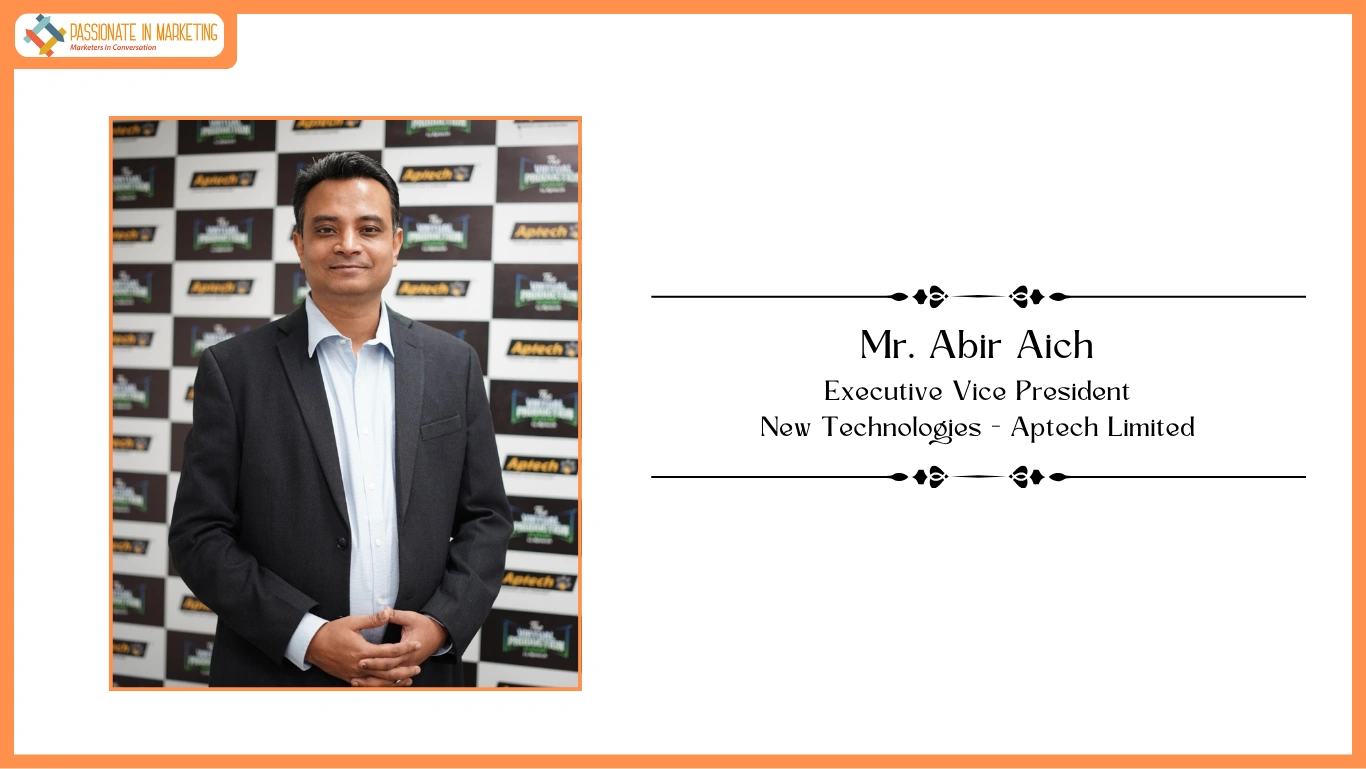
- India’s creator economy has evolved from a side hustle ecosystem to a serious career avenue. How do you see this shift impacting career opportunities within animation, gaming, VFX, and digital content creation?
Until a few years ago, most aspiring animators, VFX artists, and game designers looked primarily at studio jobs as their destination after completing their training. Today, creators are building businesses, content formats, local stories, and intellectual property; creating an entirely new layer of opportunities for creative professionals.
What is particularly interesting is that creators now require many of the same skills traditionally found in studios, including animation, motion graphics, visual effects (VFX), editing, and immersive content creation. This has expanded the market for creative talent beyond production houses and broadcasters.
At MAAC, we are seeing growing interest from students who want to build careers not only as professionals but also as independent creators and entrepreneurs. We have introduced Creator X with that specific focus, with an intent to support aspiring creators with the right knowledge required to excel in IP development and storytelling. As the creator economy matures, success will increasingly depend on a combination of technical and soft skills, and the ability to build and own original content.
- AI is rapidly changing creative workflows across industries. In your view, which roles in the AVGC-XR sector are being transformed the most, and what new opportunities are emerging as a result?
AI is transforming several aspects of the creative pipeline, particularly tasks that are repetitive, time-consuming, and process driven. Areas such as storyboarding, pre-visualization, asset generation, editing assistance, content localisation, and VFX workflows are already seeing efficiency gains. A project that would earlier take months to finish, can be completed today within weeks through the assistance of technology we have at our disposal today, such as virtual production and AI-assisted creation.
However, the bigger story is not automation but evolution. New roles are emerging that did not exist a few years ago, including AI-assisted artists, virtual production specialists, immersive content designers, and professionals who can bridge creative storytelling with emerging technologies. The industry is increasingly looking for talent that understands both artistic principles and technological tools.
We are adapting our programs at MAAC to reflect this shift because the future belongs to creators who can use AI to enhance creativity rather than simply automate tasks.
- The AVGC-XR sector is often seen as one of India’s next major growth industries. What will it take for India to become a global hub for animation, gaming, immersive media, and original IP creation?
India has all the ingredients required to become a global AVGC-XR powerhouse. We have a young workforce, thriving digital ecosystem, vast internet proliferation, and a growing appetite for content. However, the next phase of growth requires us to move beyond being known primarily as a services destination.
The real opportunity lies in creating globally recognized intellectual property. We need greater investment in talent development, stronger collaboration between academia – industry, and more support for creative entrepreneurship.
India’s cultural diversity, mythology, and contemporary stories offer immense creative potential. If we can combine world-class production capabilities with original storytelling, India can become a leading exporter of content, characters, games, and immersive experiences rather than simply executing projects for global studios.
- There is growing concern that AI may reduce demand for entry-level creative talent. How should aspiring professionals adapt their skills to remain relevant and competitive in an AI-driven industry?
Every technological shift brings concerns about job displacement, but history shows that technology often changes jobs more than it eliminates them. AI is no exception. While certain entry-level tasks may become automated, the demand for creative thinking, storytelling, design sensibility, and problem-solving remains strong.
Aspiring professionals should focus on building skills that complement technology rather than compete with it. Understanding AI tools will become increasingly important, but equally critical are communication, collaboration, creative judgment, and the ability to develop original ideas. At MAAC, we encourage students to view AI as a creative partner. Those who can combine human imagination with technological fluency will be far better positioned than those who rely solely on technical execution.
- We are seeing increasing interest among Gen Z in freelancing, content creation, and entrepreneurship. How is this changing the traditional career pathways within the creative industry?
Gen Z is redefining what a successful career looks like. Many young professionals are no longer limiting themselves to a single job or employer. Instead, they are building portfolio careers that combine freelancing, content creation, entrepreneurship, consulting, and conventional employment.
This shift is creating a more dynamic creative ecosystem where talent can monetise skills in multiple ways. Social media platforms, creator marketplaces, and digital distribution channels have lowered entry barriers, allowing individuals to reach global audiences directly. As a result, institutions like MAAC must prepare students not only for employment but also for entrepreneurship and self-driven careers.
We are seeing a growing demand for skills such as personal branding, project management, client engagement, and intellectual property creation alongside traditional creative training. A key part of our pedagogy at Creator X is enabling and empowering our learners to understand the basics of intellectual property, business development, soft skills, and the ancillary skills required to succeed in this business.
- Virtual production, gaming engines, XR, and immersive storytelling are converging rapidly. What skills will creative professionals need to thrive in this new entertainment ecosystem?
The boundaries between film, gaming, animation, and immersive experiences are disappearing. Technologies such as virtual production, in-camera VFX, transmedia content, and gaming engines are creating a unified ecosystem where stories exist across diverse formats.
To thrive in this environment, creative professionals need a combination of artistic and technical skills. Storytelling remains the foundation, but it must be complemented by knowledge of real-time engines, virtual production workflows, immersive design, AI-powered tools, and collaborative production pipelines. More importantly, professionals must cultivate adaptability and continuous learning.
The tools may evolve rapidly, but the ability to understand emerging technologies and apply them creatively will remain a key differentiator in the years ahead.
- As India’s Orange Economy gains momentum, what role can the AVGC-XR and creator economy sectors play in driving employment, innovation, and economic growth?
The Orange Economy is built on creativity, intellectual property, and cultural value creation, making the AVGC-XR sector a natural growth engine. In terms of employment, it is estimated that the sector will house over 2 million jobs, as reported by our Honourable Finance Minister during the FY27 budget. This entails more opportunity for learners to also contribute to exports, innovation, and entrepreneurship.
Unlike traditional sectors, creative industries create value through ideas, storytelling, and digital experiences. The creator economy further amplifies this by enabling individuals and small teams to build scalable businesses around content and communities. India has a unique advantage because of its young population, digital adoption, and rich cultural heritage. If nurtured effectively, the AVGC-XR and creator economy sectors can become a major driver of economic growth while positioning India as a global leader in creative innovation.
- Having spent 25 years building creative talent in India, what are the biggest changes you have witnessed in the industry, and what trends do you believe will define the next decade of creative careers?
One of the biggest changes has been the transformation of creative careers from niche professions into mainstream aspirations. When MAAC started in 2001—animation and visual effects were relatively new career choices and tied to our filmmaking industry.
Today, this is part of a much larger ecosystem that includes advertising, live events and experiences, media & entertainment, digital content creation, gaming, and more.
The pace of technological change has also accelerated dramatically.
Looking ahead, AI has the potential to be deeply integrated into creative workflows and enhance individual output. Secondly, audiences will pay greater emphasis to original intellectual property and creator-led businesses, as we already seeing this shift in industries like marketing and communications. Lastly, immersive technologies can transform how audiences consume content. Let’s be honest, we are not sitting and watching cable television at home anymore. We are consuming content across various forms—on mobiles, tablets, smart glasses and much more. Content too will need to adapt to these dynamic needs.
Success of a content piece is increasingly dependent on professionals and skilled individuals who can combine creativity, technology, and innovative thinking.
- Many industry leaders believe India must move beyond outsourced services and focus on creating globally recognized intellectual property. How can the next generation of creators contribute to this transition?
India has earned global recognition for its workforce capabilities, but the next stage of growth will be driven by ownership of content and intellectual property. The next generation of creators have a critical role to play in this transition.
Young creators must think beyond execution and focus on building original worlds, characters, stories, and experiences that can resonate globally. India possesses an extraordinary wealth of cultural narratives, folklore, mythology, and contemporary stories that remain largely untapped.
Educational institutions and industry stakeholders must encourage experimentation, entrepreneurship, and long-term thinking. The future value of the creative economy will come not only from producing content for others but from owning and monetizing original intellectual property that can travel across platforms and international markets.
- Future-ready skilling has become a major industry conversation. What are the most critical skills that educational institutions and learners should prioritize to succeed in the rapidly evolving creative-tech landscape?
Future-ready skilling is no longer just about learning software. The creative technology landscape is evolving too quickly for technical skills alone to guarantee long-term success. A combination of creativity, adaptability, and technological fluency will define the next chapter.
At MAAC, we believe students should be trained to think creatively and strategically while remaining comfortable with change. The professionals who succeed in the future will be those who can combine human insight with technology to create memorable experiences, compelling and relatable stories.

