


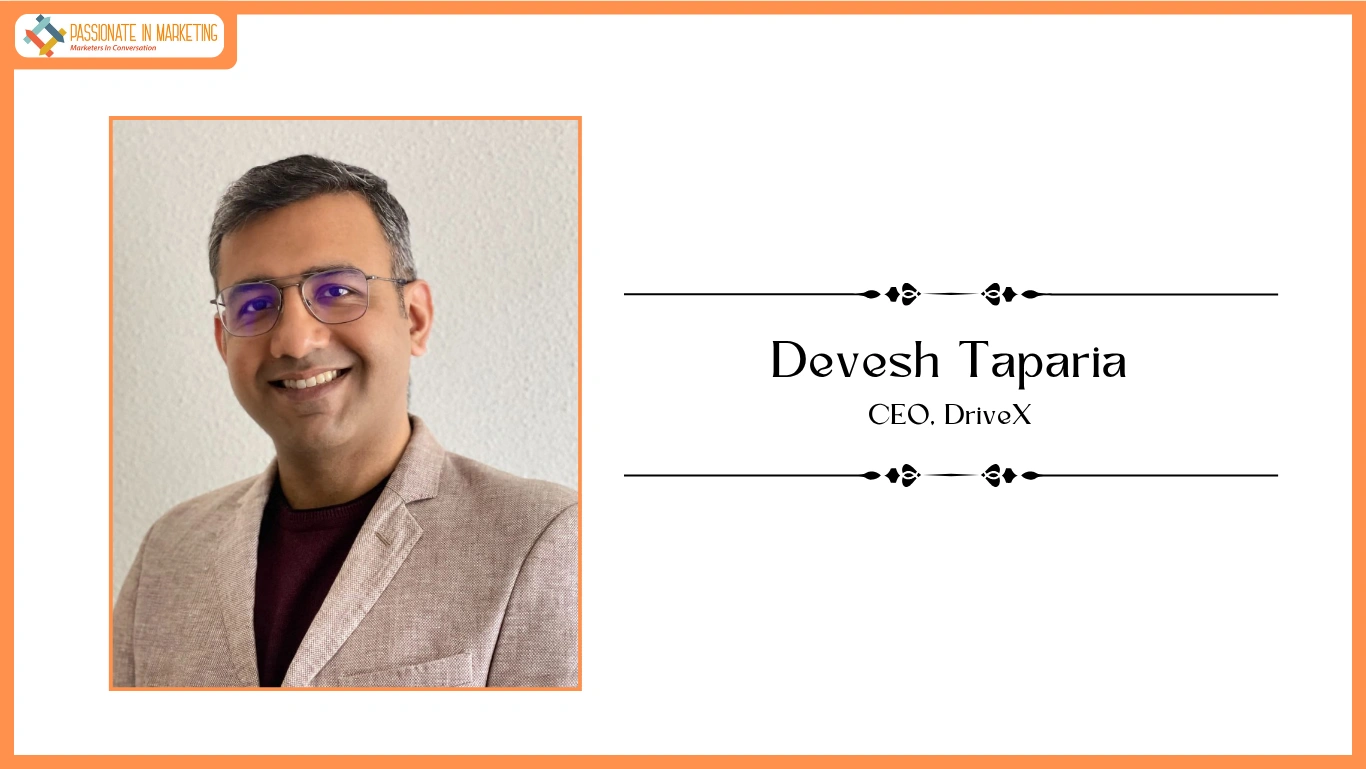
Why “Pre-Owned” Is Becoming the New Smart Choice for Indian Riders, explains Devesh Taparia, CEO, DriveX Mobility
- Are Indians beginning to view pre-owned two-wheelers as a smart mobility choice?
The mindset is shifting from “used because it is cheaper” to “pre-owned because it offers better value.” Consumers are becoming much more conscious of total cost of ownership, depreciation and actual usage. For a first-time buyer, a well-inspected and refurbished two-wheeler can provide substantially better value than buying new. At DriveX, we see this shift reflected in the way consumers evaluate vehicles today, they are asking more about condition, quality, history and value, rather than simply looking for the lowest price. That is a healthy evolution for the category.
- What does formalisation mean for consumers traditionally dependent on informal dealers?
Formalisation is fundamentally about replacing uncertainty with transparency. The informal market has always had strong local relationships, but the consumer often has limited visibility into inspection, vehicle history, pricing or what happens after the transaction. An organised ecosystem can standardise these experiences. At DriveX, for example, inspection, valuation, documentation and refurbishment are structured processes rather than dependent entirely on individual negotiation. The objective isn’t to eliminate the traditional dealer ecosystem; it is to raise the trust benchmark across the industry.
- How does DriveX’s integrated model change the buying and selling experience?
The biggest advantage is one connected journey instead of multiple fragmented transactions. A consumer shouldn’t have to separately figure out valuation, inspection, documentation, refurbishment and fulfilment. Bringing these capabilities together makes the experience more predictable and reduces friction. That is where DriveX’s integrated model creates an advantage. Whether someone is selling a vehicle or looking to buy one, we can bring multiple parts of the journey into a structured ecosystem. The real product we are building isn’t just a marketplace; it is a trusted mobility ecosystem to help make the right choice.
- Why is refurbishment becoming increasingly important?
Refurbishment is where the industry can move from reselling an ageing asset to creating value from it. A five-year-old vehicle doesn’t automatically become a poor vehicle. Its actual condition and reliability matter much more. Professional refurbishment can restore usability, improve customer confidence and extend the productive life of the vehicle. This is an area where DriveX has built meaningful capability because refurbishment sits at the intersection of quality, trust and value creation. I believe it will increasingly become a distinct value-creation layer in the automotive ecosystem, rather than simply an operational activity before resale.
- Can technology make C2C as seamless and trusted as digital commerce?
Technology is only one part of the answer. Technology can remove friction; it cannot automatically create trust. That is why our approach with DriveX Direct is particularly interesting. C2C can offer better price discovery and convenience, but the transaction needs supporting layers such as inspection, verification, documentation, payment and fulfilment. The opportunity is to combine the convenience of digital commerce with the trust infrastructure of an organised automotive platform. That is what will make C2C scalable—not simply putting buyers and sellers on the same screen.
- Could pre-owned two-wheelers drive financial inclusion and mobility access?
Absolutely. I would actually call it mobility inclusion. For many Indians, particularly first-time buyers, the biggest barrier isn’t the desire for personal mobility; it is the upfront cost of acquiring it. A quality pre-owned two-wheeler lowers that entry barrier considerably. An organised ecosystem like DriveX can further strengthen this by bringing greater transparency around vehicle quality and pricing, and the impact goes beyond consumption. Affordable mobility gives people access to jobs, education, commerce and opportunity.
- What role can pre-owned two-wheelers play in urban productivity?
A very significant one. For millions of Indians, a two-wheeler is not just a means of transportation—it is a productive asset. Delivery workers, technicians, sales professionals, small entrepreneurs and daily commuters depend on reliable personal mobility to earn and participate in the urban economy. If we can make reliable two-wheelers more accessible through a trusted pre-owned ecosystem, we effectively lower one of the barriers to economic participation. That is why we at DriveX see the category not merely as an automotive opportunity, but as part of the larger mobility and economic infrastructure of India.
- How significant could pre-owned two-wheelers become in India’s reuse economy?
Potentially very significant. Circular mobility starts with a simple principle: before producing something new, maximise the useful life of what already exists. Every vehicle that is properly inspected, refurbished and transferred to another user represents another cycle of productive utilisation. This is central to what we are building at DriveX. Procurement, refurbishment and resale are not isolated activities—they form a broader ecosystem designed to keep vehicles productive for longer. At scale, India’s pre-owned two-wheeler market can simultaneously address three challenges: affordability for consumers, better utilisation of existing assets, and more sustainable mobility.

