


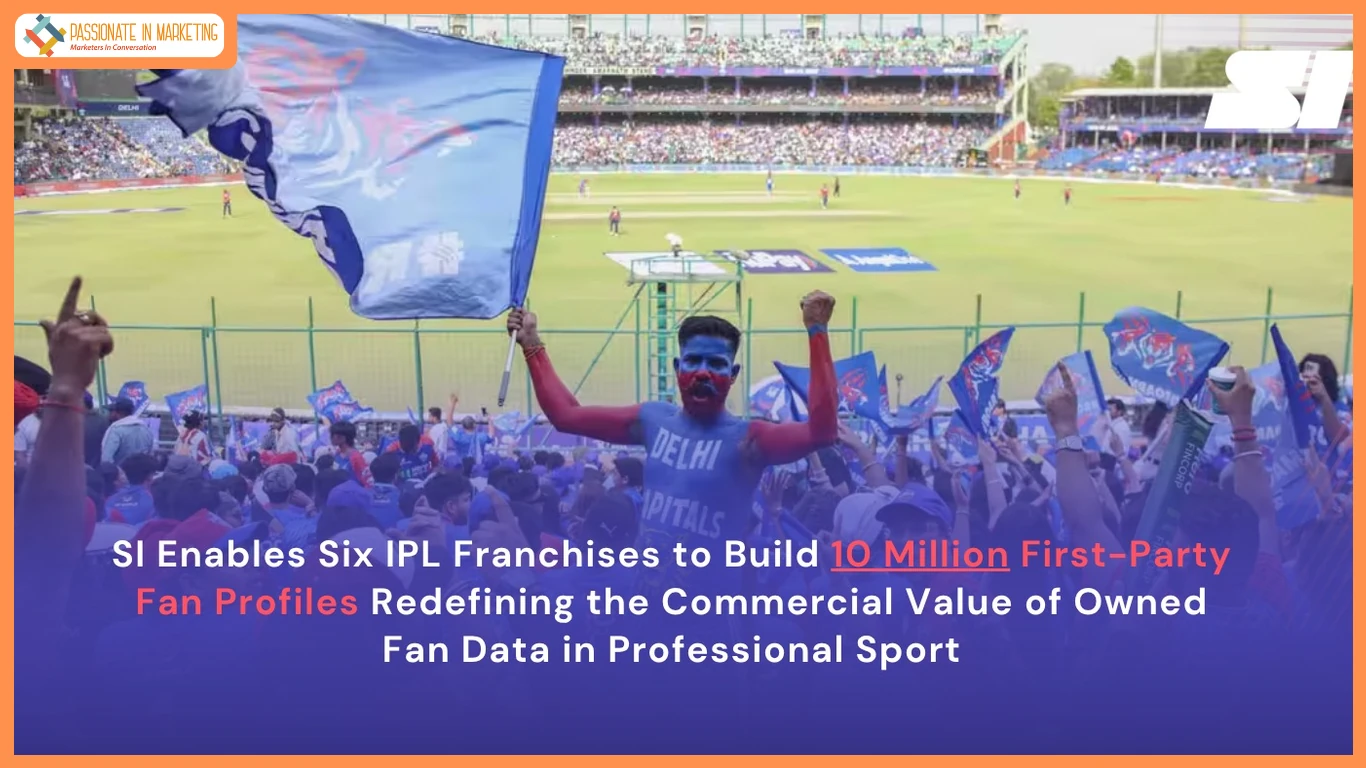
Mumbai, May 27, 2026: SI, South Asia’s leading sports technology and content company, today announced that six IPL franchises have collectively surpassed 10 million first-party fan profiles during the 2026 season, marking a significant milestone in owned fan data built by rights holders within a single professional league, delivered through a consistent fan engagement framework across each franchise’s digital ecosystem.
The profiles belong to the franchises. What SI provided was the platform, the acquisition strategy, and the engagement architecture that made building them possible. Through FanOS, SI’s proprietary fan engagement operating system, franchises converted passive social followers into known, consented users registered directly within their own digital ecosystems, with full data rights retained by each franchise.
“Ten million profiles means ten million fans that six IPL franchises can now understand, segment, and activate, not as an audience, but as known individuals. SI built the infrastructure that made that possible. The data belongs to the franchises; the commercial advantage belongs to the franchises. Our job is to ensure that advantage is real, measurable, and impossible to replicate through broadcast or social reach alone.”
— Chintan Shah, SVP Revenue India, SI
Why Owned Fan Data Changes the Commercial Equation
For most of professional sport’s digital era, audience scale has been the primary commercial currency, with broadcast reach, social following, and platform impressions the headline numbers presented to sponsors. The 10 million profile milestone marks a decisive departure from that model.
First-party fan profiles are not impressions. They are identifiable individuals who have actively registered within a franchise’s own digital ecosystem, consented to data use, and engaged through owned channels. Each profile carries behavioural data including match preferences, content consumption patterns, commerce intent and loyalty tier, that broadcast audiences do not provide and social platforms do not share with the franchises that generate the following.
The commercial distinction is not incremental. It is structural. Brand partners investing in sports properties are increasingly demanding audience accountability that reach-and-impression metrics cannot deliver. Franchises with structured first-party data ecosystems can demonstrate who their fans are, how they behave, and how brand activations perform against identifiable individuals rather than estimated audiences. That capability is now owned by the franchises. SI’s role was to build the engine that delivered it.
How FanOS Built the Infrastructure Behind the Numbers
The 10 million profiles were not acquired through a single campaign. They were built systematically using FanOS, deployed across franchise web platforms, mobile apps, loyalty programmes, and direct messaging channels, with each franchise retaining full ownership of the fan relationships generated within their ecosystem.
Fans were acquired through owned channels, registering for loyalty rewards, accessing exclusive content, and engaging through WhatsApp journeys built around live matches. The deliberate design ensured every fan interaction fed directly into each franchise’s own database rather than a platform they did not control.
Once acquired, every retention was driven through a separate engagement layer of prediction formats, gamification mechanics and personalised content journeys that incentivised repeat interaction and deepened behavioural signals over time.
The result is a fan data layer that each franchise owns outright. More importantly, that data layer does not reset at season end. The profiles, behavioural histories, and engagement patterns persist and compound across seasons, creating a commercial asset for the franchises, with increasing value over time and a structural shift from the seasonal reset that characterises broadcast and social audience metrics.
A Model Any Rights Holder Can Own
The infrastructure SI deployed in the IPL is not a cricket-specific solution. In every case, data ownership remained with the rights holder. SI provided the platform; the franchises and federations built the asset.
The commercial logic is equally universal. Whether the rights holder is an English county cricket franchise, a European football club, a national sports federation, or a state government delivering a multi-sport event, the challenge is identical: converting passive reach into owned fan relationships that can be monetised, retained, and reported on with precision.
As sports properties globally face increased pressure from brand partners to demonstrate audience quality rather than audience size, the rights holders that have invested in building their own first-party data infrastructure will be structurally advantaged in commercial negotiations. SI’s role in enabling that advantage at IPL scale is both a proof of capability and an open invitation to every rights holder still relying on third-party metrics to consider what it would mean to own their fan data outright.
About SI
SI (formerly Sportz Interactive) is the leading sports technology partner for leagues, teams, federations, broadcasters, and media companies worldwide. With 24 years of engineering pedigree, SI specialises in creating scalable, enterprise-grade digital products that turn fan engagement into measurable commercial value. SI works with world-renowned sporting organisations, leagues, and franchises across India and globally – including the BCCI, ICC, Pro Kabaddi League, WPL, ILT20, 7 out of 10 IPL teams, the NBA, UFC, Google, Amazon Prime Video, and more.
Through FanOS: The Fan Engagement Operating System for Sports Organisations, SI provides a portfolio of productised solutions built specifically for the sports industry, through a suite of flexible, independent modules across Data, Experiences, and Activations that are designed to run as a complete ecosystem, or seamlessly plug into existing workflows.
SI doesn’t just build fan experiences; we ensure sports organisations operate like scalable, data-integrated enterprises pioneering the future of sports fandom.

