


Indian consumers are moving beyond traditional protein formats, seeking options that are easier to consume, aligned with local tastes, and more engaging in flavour. Zydus Wellness is responding to this shift by expanding its RiteBite Max Protein portfolio beyond bars with an aim to tap into India’s $10–12 billion market, which is growing at a mid-teen CAGR.
India’s protein market is entering a new phase of growth, driven not just by rising awareness but by a shift in how consumers want to consume protein. While multiple studies continue to highlight a persistent protein deficiency across large parts of the population, urban demand for protein-led products is accelerating, particularly within functional foods and beverages.
What was once largely confined to powders and gym-led routines is now expanding into everyday formats. Industry estimates suggest that the functional foods and beverages segment in India is growing at over 10–12% annually, with protein emerging as one of its fastest-growing sub-categories. Urban consumers are driving this shift, seeking convenient ways to integrate protein into daily life, across work, travel and in-between meals.
The shift in consumer preferences is prompting companies to recalibrate their playbooks. Zydus Wellness, for instance, is scaling its Food & Nutrition business and accelerating the expansion of its RiteBite Max Protein portfolio to capitalise on India’s rapidly evolving protein market, which is estimated at $10–12 billion across supplements, functional foods, and everyday formats and growing at a mid-teen CAGR.
RiteBite Max Protein, in particular, has demonstrated strong momentum post-acquisition, and posted near double-digit EBITDA margins in Q3 FY26, underpinned by distribution expansion, innovation, and category tailwinds. This aligns with Zydus Wellness’ larger strategy of building a full-spectrum nutrition portfolio spanning bars, snacks, cookies and ready-to-consume formats, positioning protein as a key pillar in its long-term growth architecture.
However, at the core of this evolution is the gap between awareness and behaviour, says Tarun Arora, CEO, Zydus Wellness. “While awareness around protein has grown significantly, regular consumption is still inconsistent. Long workdays, on-the-go lifestyles, and fragmented eating habits continue to limit how consumers engage with traditional formats that require preparation or planning,” said Arora.
Reducing this friction is becoming central to category growth and consumer businesses are increasingly focusing on formats. Zydus Wellness’ latest portfolio expansion reflects this shift. The company has entered the ready-to-drink (RTD) segment with functional protein shakes in flavours such as Choco Burst and Berry Blush, each delivering 26 grams of protein in a 250 ml portable format. The move aligns with the growth of functional beverages, which has emerged as a key within the broader nutrition market, supported by rising demand for convenience-led formats.
At the same time, the category itself is fragmenting, reflecting the intensifying competitive landscape that is triggered by a deeper behavioural shift. While one segment of consumers is gravitating towards familiarity and seeking culturally rooted formats that align with traditional diets, another cohort is driving demand for novelty, experimenting with global flavours and new-age snacking formats.
This divergence is also visible in market trends. According to Arora, “India’s protein products market is expected to witness an incremental growth coming from everyday formats such as bars, functional snacks, and ready-to-consume products. Simultaneously, the healthy snacking segment is expanding faster than the broader packaged foods market, with protein-led snacks and clean-label offerings emerging as key growth pockets.”
In response, Zydus Wellness is extending its presence within snacking through two distinct directions – cultural familiarity and global flavour trends.
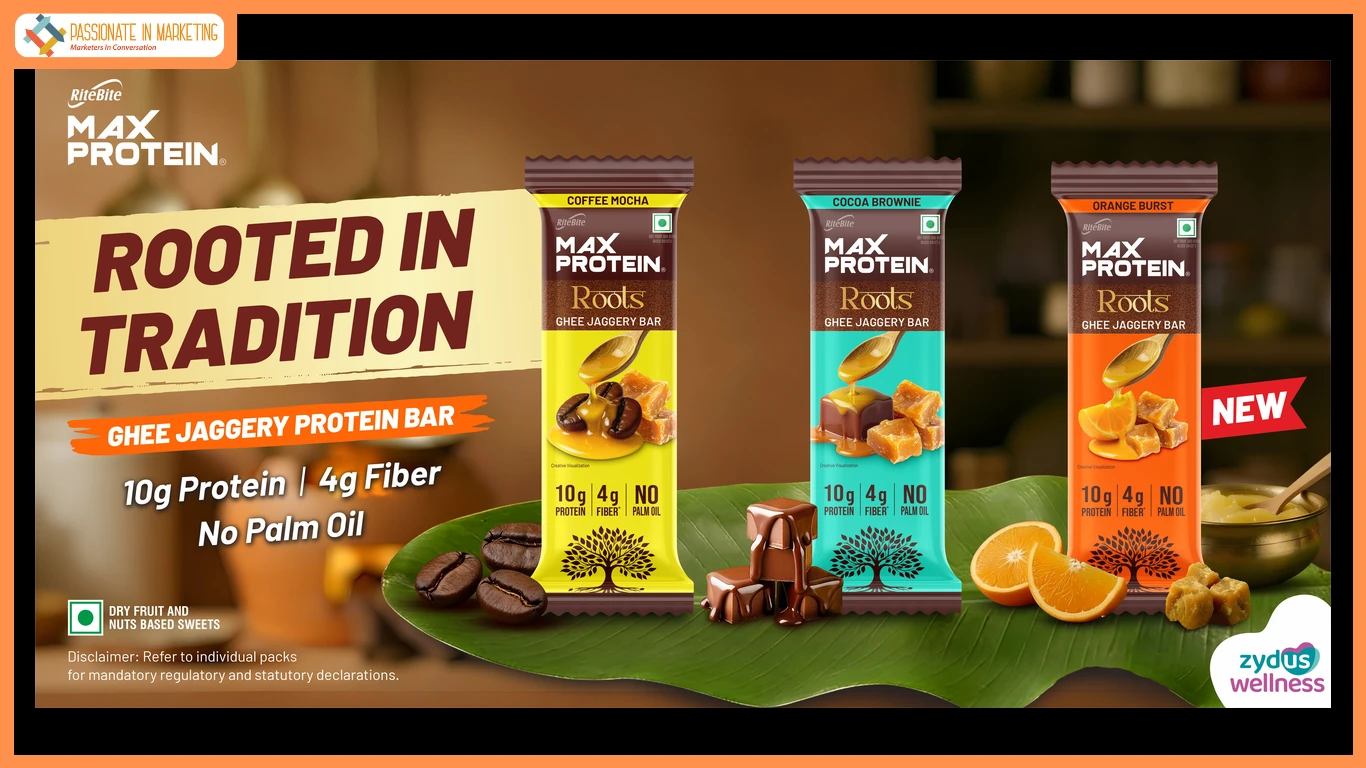
One of these is the RiteBite Max Protein Roots Ghee Jaggery Protein Bar Range. The product combines familiar Indian ingredients, like ghee and jaggery with a whey and casein protein blend, delivering 10 grams of protein and 4 grams of fibre in a format that aligns with both taste familiarity and functional nutrition. The positioning reflects a broader trend where traditional ingredients are being reintroduced in modern, functional formats.
In parallel, the company has introduced RiteBite Max Protein Korean Chips, a 7-grain protein snack range inspired by Korean flavour profiles such as Hot Chilli, Barbeque and Gochujang. The product delivers 10 grams of protein and 4 grams of fibre per 60 grams of serving, alongside clean-label cues such as no palm oil and gluten-free formulation. This highlights the growing convergence of global taste-led innovation and better-for-you positioning.
Together, these moves indicate a broader recalibration within the protein category. While product efficacy is increasingly driving growth, product relevance and how well formats fit into evolving consumption habits are becoming equally critical for businesses.
For Zydus Wellness, the focus is on expanding protein beyond a single format into a wider consumption ecosystem. “There is a fundamental change in how consumers approach protein today. It is no longer limited to the gym ecosystem or specialised diets. People want nutrition that fits into real life, at work, while travelling, or during busy days,” Arora said.
This is likely to shape the next phase of category growth. As consumption opportunities expand, the protein market will move further towards diversified formats, spanning beverages, bars and savoury snacks.
For companies, the challenge is shifting accordingly, from driving awareness to enabling consistency. “The real opportunity now lies in making protein a seamless part of daily life,” Arora added.
As innovation continues across convenience, taste and cultural relevance, protein is gradually transitioning from a specialised supplement to a more integrated part of everyday diets, indicating a category that is not just expanding, but evolving in structure.

