


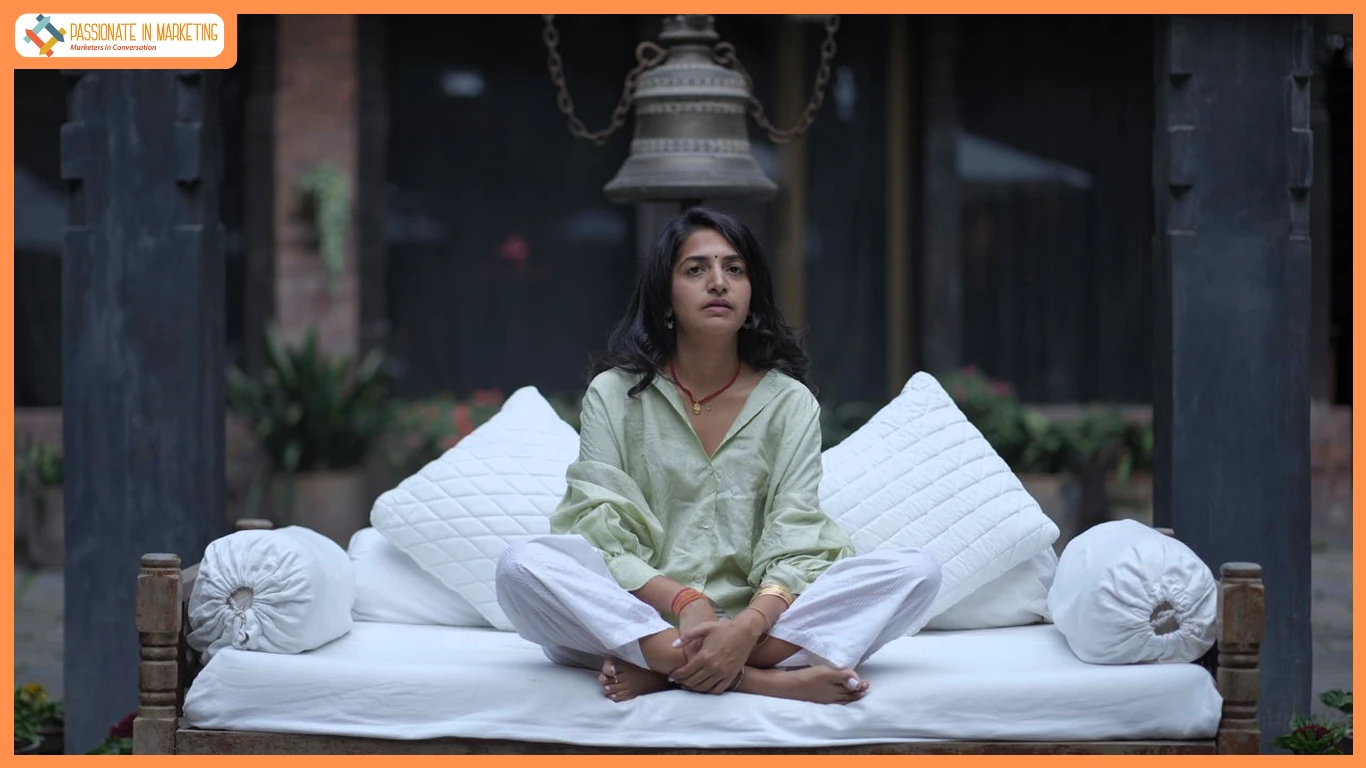
It is Navaratri, the 9 nights where we worship and celebrate the Goddess. The very existence of Shakti is testament to the deep reverence we hold to the divine feminine in the Indian collective. All across India, we worship Devi, from a young age we are reminded that she has agency, that her power is all pervasive and that she will crush all injustice. In any city or village you will find small temples honouring Maa, during Navaratri there are processions throughout India, as countless people fast, pray and celebrate the Goddess. My favorite part is Ashtami, followed by the Kanchka rituals, where young girls are honoured as embodiments of the great Goddess.
Yet, beyond this spiritual faith, do we apply and embody this reverence in our daily lives? Do we respect the feminine in day to day life?
Across India, many women grow up within environments where certain experiences remain difficult to express openly. Families, communities and institutions transmit expectations about duty, respect and loyalty. These expectations move through everyday behaviour: through reactions, approvals, silences, and the subtle signals that communicate what may be spoken and what should remain unspoken.
Over time, these expectations become part of the psychological landscape of the people who live within them. Parents pass forward what they themselves inherited. Elders protect the social order they believe sustains stability. Communities prioritise harmony and reputation. Institutions often preserve continuity. Through these processes, patterns of behaviour repeat across generations.
In this way, silence becomes normalised.
Many women encounter moments when expressing discomfort brings dismissal, disbelief, or pressure to remain quiet. Pain may be reframed as duty. Questions may be interpreted as disobedience. Experiences that disrupt the accepted order often remain confined to private spaces.
When such responses are repeated over time, silence becomes part of the environment itself. What began as individual reactions gradually forms a broader social pattern.
To lose your dignity is one of the most painful, shattering life experiences, it leads to a profound state of trauma and disenchantment. Its impact extends into every cell and system within us. Interestingly, in our Hindu tradition we visit powerful Shakti Peethas, each built as an altar to Sati, and each a reminder that it was created as a result of her loss of dignity and intense humiliation. We bow our heads and seek refuge in each one of the Shakti Peethas, from Kamakhya Devi to Jawalamukhi, Chint Purni to Kalighat. Yet, we carry our own loss of dignity in silence, as there seems to be no other choice, no understanding or anyone to listen. I encountered that many many other women, from all backgrounds and ages were experiencing a similar pattern of pain, disillusionment and trauma. From friends, family members to strangers alike, we all experienced the same patterns of humiliation, harm and dehumanisation.
Somewhere your nervous system cramps up with the traumas experienced and the ability to not speak up or to be heard.
Break the Silence is an anonymous archive of women’s stories. These are accounts of inequality, control, violence, pressure and the quieter moments in which a woman’s voice encountered resistance. Some stories describe explicit harm. Others reveal subtle dynamics that slowly shape identity, choices, relationships, and life paths.
Individual experiences often appear isolated. When many voices are gathered together, recurring patterns become visible. These patterns reveal how expectations surrounding gender move through families, workplaces, communities, and institutions across generations.
This initiative exists to bring those lived experiences into the open. Along with it, we have added the lens from scholars of ancient disciplines such as Joytish to scholars of the Vedic sacred texts that share deep wisdom on this subject.

