


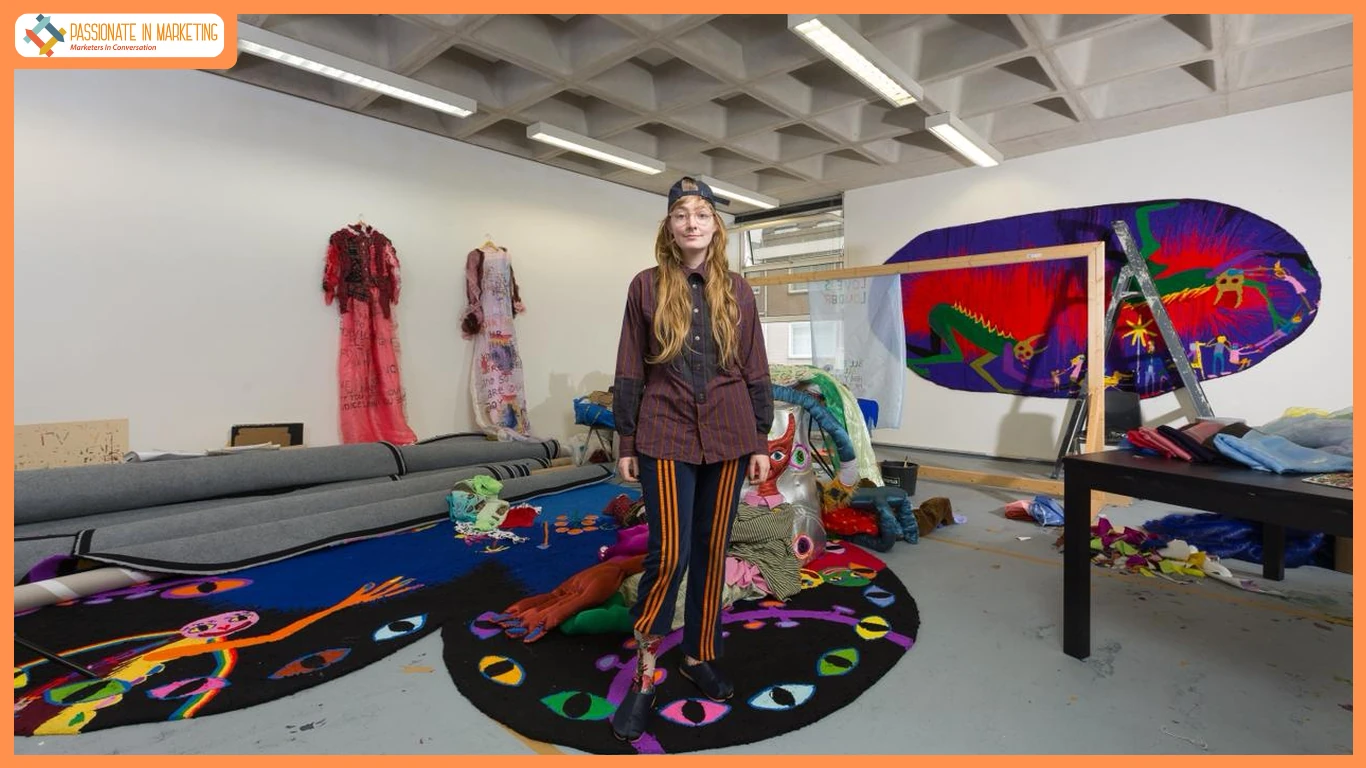
Set against the heavy, historical backdrop of the Dutch Warehouse in Fort Kochi, visitors are greeted by the vibrant yet contemplative presence of aged fabrics and intricate ceramics. The exhibition, titled “Mild Tooth of Milk” and organized by the Museum of Art & Photography (MAP), features the work of Dutch artist Afra Eisma and has emerged as one of the most resonant highlights of this year’s Kochi-Muziris Biennale.
Based in The Hague and Amsterdam, Eisma constructs a distinctive creative universe through textiles and vividly colored ceramics. Beneath their whimsical aesthetic lies a profound engagement with themes such as gender-based violence, mental health, and resilience. Rather than overwhelming the senses, her work offers a quiet, empathetic space—one that gently invites reflection and emotional connection. A particularly poignant aspect of the exhibition includes works expressing solidarity with the people of Palestine, acknowledging lives disrupted and lost in the wake of protracted geopolitical conflict. At its core, Eisma’s practice seeks to cultivate a sanctuary grounded in care, compassion, and collective support.
The exhibition is anchored by two major installations: Hush and Warrior Garments. Hush takes the form of an expansive, tactile tapestry where organic shapes, whimsical footwear, hearts, and eyes are interwoven across the surface, creating a layered sensory experience that engages both sight and touch. In contrast, Warrior Garments presents a series of “imaginary clothes,” meticulously stitched from silk and organza. These garments act as vessels for the artist’s expressions of protest and resistance, transforming anger into sites of healing and empowerment.
Through these installations, Eisma creates a space of recognition and solace, particularly for survivors of sexual violence. Her work demonstrates how personal and political narratives can intersect, allowing resistance and solidarity to coexist meaningfully. During the exhibition, the artist actively engaged in dialogue with visitors, fostering an environment where the boundaries between creator and audience dissolved into mutual exchange.
This participatory ethos extended into a series of workshops that accompanied the exhibition. Participants were invited to create dolls using socks and scrap fabric while sharing personal stories, transforming the act of making into a collective process of healing. Complementing this, curator Simi Mary of the India Art Project led a weaving workshop focused on repurposing discarded materials. Known for her work with children and marginalized communities, Mary guided participants in reimagining old textiles into meaningful artistic expressions.
Together, these initiatives transformed the Biennale venue from a site of passive observation into a dynamic space of interaction, empathy, and community. Mild Tooth of Milk ultimately stands as a testament to the power of art—not only as a medium of expression, but as a catalyst for dialogue, healing, and shared human experience.

